

Giving tomorrow’s mechanics real-world tools and industry connections
Sno-Isle TECH students get donations from Community Transit
.webp?sfvrsn=9c3a2be1_2 "Sam Menzimer")
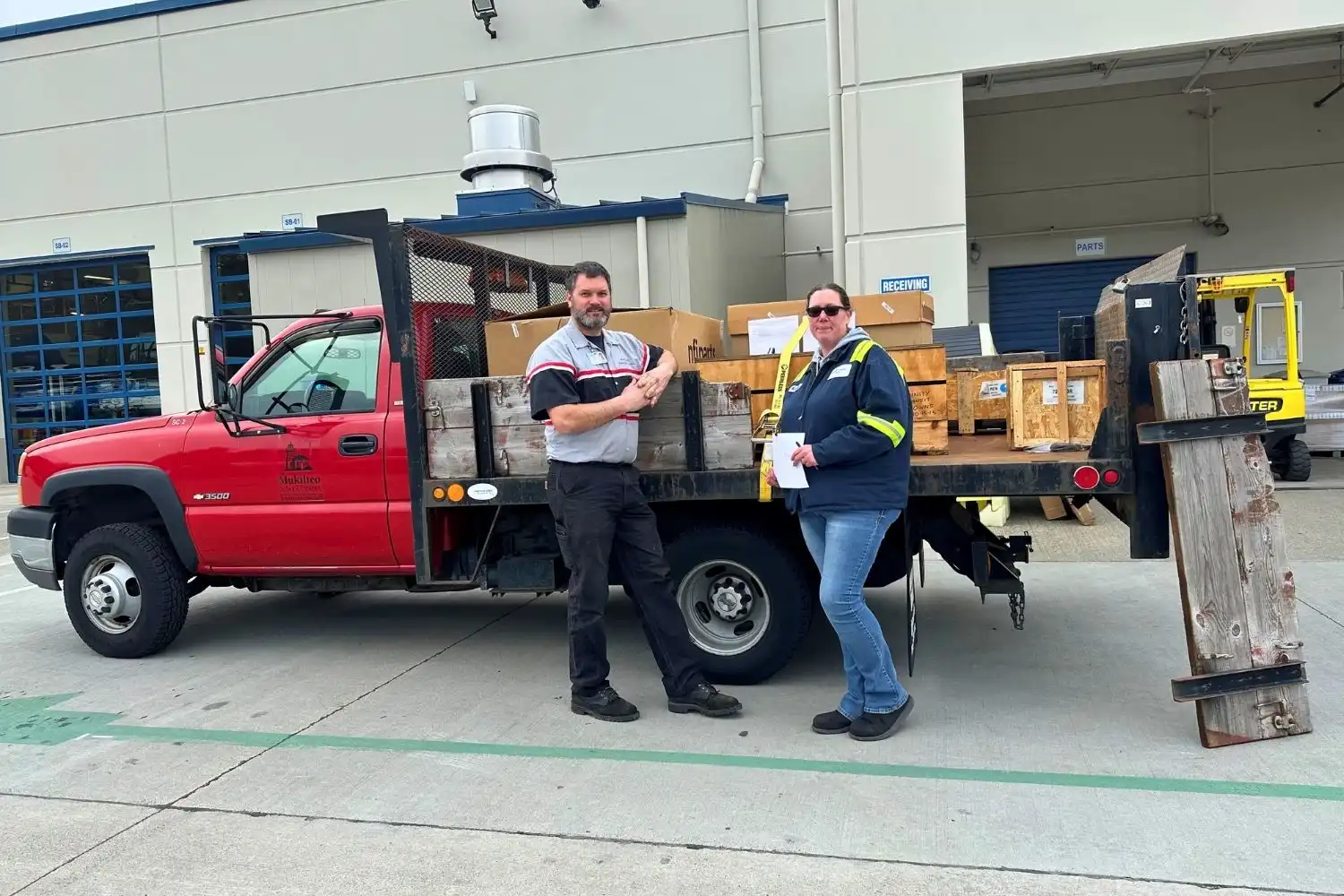
Pictured above: Brent Delfel with Sno-Isle TECH and Michelle Flatt with Community Transit stand in front of a truck that is loaded with tools and catalogs being donated to students in Sno-Isle TECH's Diesel Power Technology Program.
Community Transit recently donated three pallets of tools and one pallet of brand-new catalogs to the Sno-Isle TECH Skills Center’s Diesel Power Technology program, supporting both student learning and sustainability. These donations give students hands-on experience with real industry equipment — the kind they might work on one day as professional mechanics.
Sno-Isle TECH is a public high school in Everett that prepares students for success in a high-tech workforce or further education. It offers a range of programs in IT, business, human services, healthcare, and the trades.
The collaboration between Sno-Isle TECH and Community Transit has spanned more than two decades. Over the years, many Sno-Isle TECH students have gone on to work for Community Transit.
Hands-on learning and industry connections
Parts previously donated by Community Transit are already making a difference in the classroom, said Brent Delfel, a 20-year instructor of the Diesel Power Technology program. He explained that the donations go beyond tools — they help students build confidence and gain practical experience with real-world components.
Delfel emphasized the importance of partnerships with industry leaders like Community Transit to keep the program current and credible.
“I'm only as smart as the last day I was in industry,” he said. “These partnerships are how I stay connected. It means a lot when I can say to students, ‘This is how it's really done out there.’”
That real-world connection leaves a lasting impression on students, too.
“The students see that the parts and tools came from the industry — that the same companies supporting our class are the ones hiring them. It’s powerful. I can think of at least eight or nine students now working at Community Transit — and there have definitely been more.”
A full-circle commitment to the community
Michelle Flatt, a Journey Parts Person at Community Transit, said the decision to donate tools and parts to local trade schools — rather than sell them — is intentional and has long-term benefits for both students and the agency.
“We believe donating parts, tools, and catalogs instead of selling them is a full-circle action,” she said. “It extends the life of the resource while also supporting the career goals of student mechanics.”