

CT becomes first transit agency to earn Salmon-Safe Certification
Recognition reflects commitment to protecting local waterways and salmon habitat

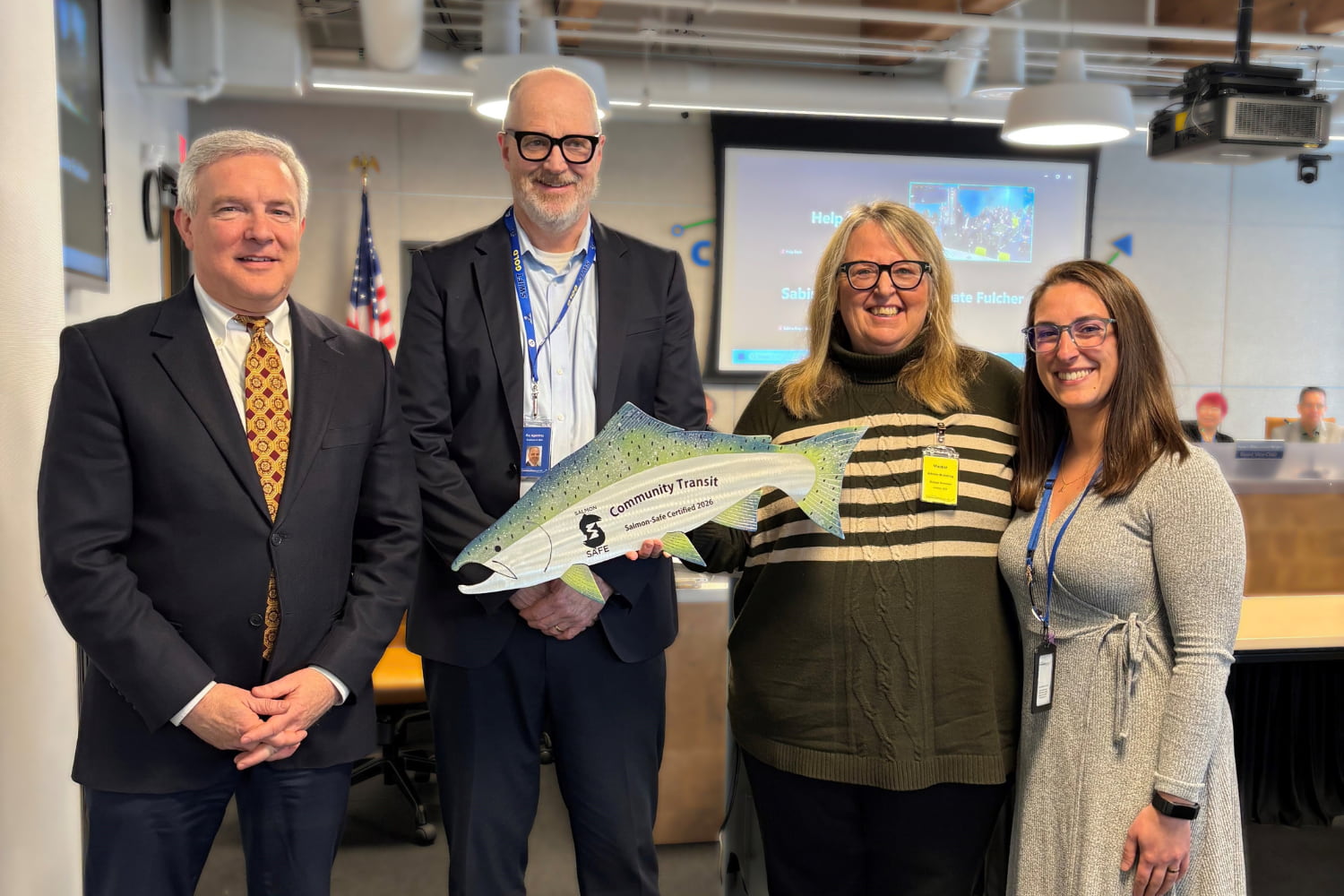
Community Transit Board Chair and Mukilteo Mayor Joe Marine, Community Transit CEO Ric Ilgenfritz, Salmon-Safe Outreach & Engagement Specialist Ellen Southard, Community Transit Senior Sustainability Program Manager Alexa Russo.
By its very nature, public transit contributes to a cleaner environment by providing alternatives to personal vehicles. Now, Community Transit is going further as it becomes the first transit agency to earn Salmon-Safe Certification. The designation by independent, non-profit environmental organization Salmon-Safe marks a major milestone in the Snohomish County agency’s commitment to supporting a healthy environment.
"As the first-ever transit agency to achieve Salmon-Safe certification, Community Transit will be working towards water quality protection goals identified by Salmon-Safe’s independent science team and reporting on its progress with respect to reducing impacts on downstream waterways,” said Dan Kent, Salmon-Safe co-founder and executive director.
Community Transit’s operations and administrative campuses span approximately 50 acres of paved surfaces, rooftops, and buildings. Stormwater runoff from bus yards, maintenance areas, vehicles, and rooftops can contain trace pollutants such as oil, brake dust, tire particles, and heavy metals. All of this can impact local waterways when rain carries these pollutants into storm drains. Because every creek, stream, and river in the region ultimately flows into Puget Sound, protecting water quality is essential to the survival of salmon and other species that depend on healthy habitats.
“Salmon-Safe certification is more than an award; it represents Community Transit’s commitment to continuous improvement of ongoing sustainability efforts in our operations and capital projects. Over the next five years, we will implement and maintain specific, science-backed practices to further strengthen watershed health in the region,” said Ric Ilgenfritz, Community Transit CEO.
To earn and maintain certification, Community Transit committed to four focus areas identified by Salmon-Safe, including:
- Reducing stormwater pollution
- Protecting green spaces
- Using environmentally protective maintenance and landscaping practices across facilities
- Training staff and partners to help prevent water pollution
For more information, including Community Transit’s Sustainability Action Plan, visit communitytransit.org/sustainability.