

A Look at Community Transit's Humble Beginnings
Celebrating 50 years of connecting Snohomish County, from a handful of leased buses to a regional powerhouse.

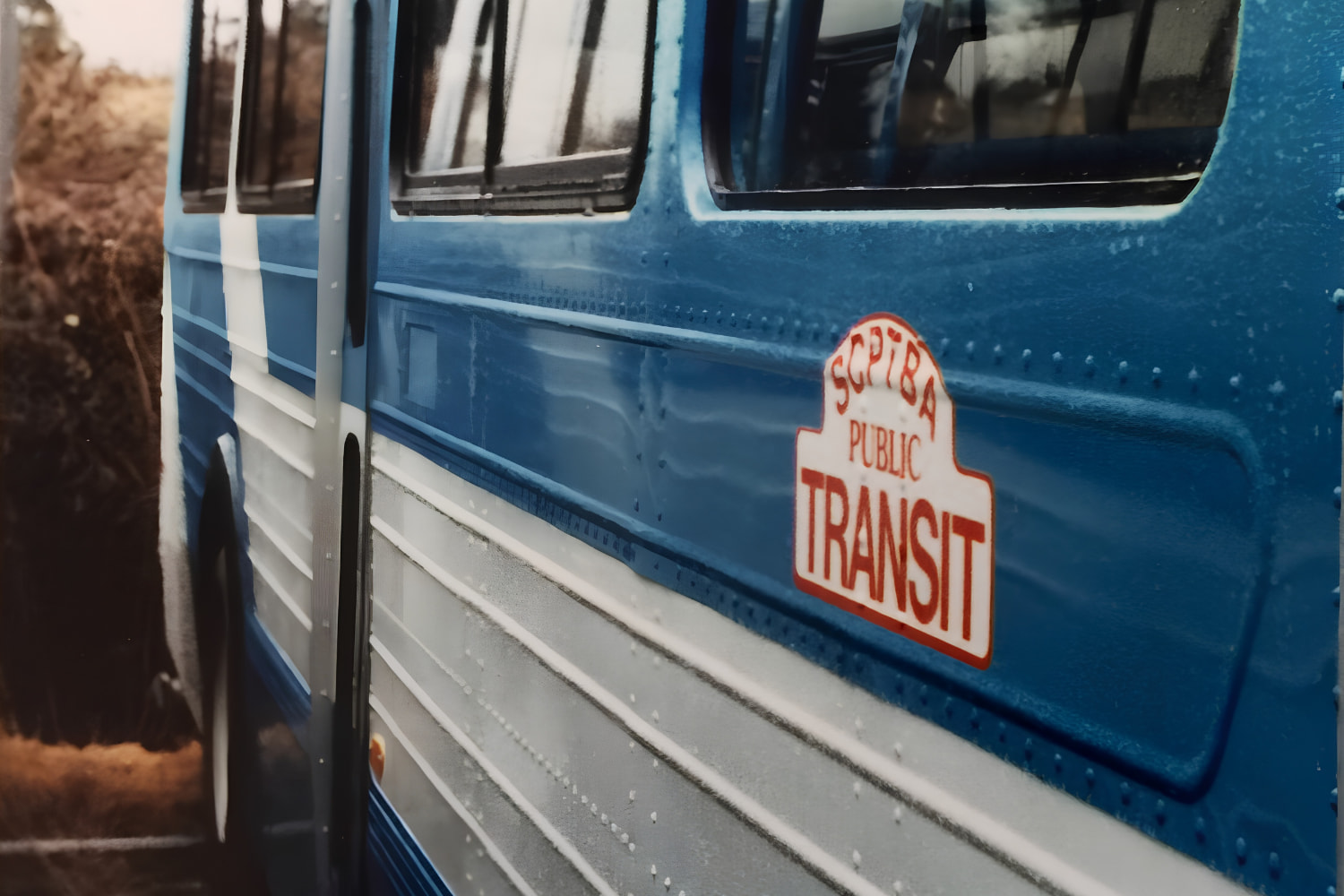
Before Community Transit began serving Snohomish County in 1976, SCTBA helped lay the foundation for local public transit. This photo captures an early chapter in that story.
Community Transit is marking 50 years of service in Snohomish County. The agency is holding a series of events this year that showcase important milestones in its history and its commitment to the public. A look back in time reveals how key historical events set in motion Community Transit’s humble start, making the agency a critical need for local residents and businesses.
A County on the Rise
Between 1940 and 1970, Snohomish County’s population tripled from 88,750 people to 265,236. Several factors triggered this growth, including the installation of military facilities, a baby boom, and the expansion of the aerospace industry. The construction of I-5 and I-405 in the 1960s helped fuel the population growth, particularly in cities like Lynnwood and Mountlake Terrace, where populations increased by 134% and 71%, respectively.
Growing Traffic, Few Options
As the population swelled, traffic worsened, but the county lacked a robust and reliable way of commuting. Public and private operators offered limited transportation services, and resources were also lacking. In 1968 and 1970, several ballot initiatives to fund and create a regional rapid transit system were put to voters but failed to pass.
A New Idea Takes Off
Former Snohomish County Executive Bob Drewel remembered how challenging his commute was early in his private-sector career, when he drove from Kirkland to Paine Field in Everett in 1974. “I thought, ‘boy, there’s got to be a better way to make this happen.’” Drewel wasn’t alone. In June 1976, voters approved the launch and funding of a new transit system called the Snohomish County Public Transportation Benefit Area Corporation (SCPTBA).
First Buses Hit the Road
On October 4, 1976, the new agency rolled out 21 leased buses with the name SCPTBA Public Transit. It picked up 500 riders that day on seven routes in Brier, Edmonds, Lynnwood, Marysville, Mountlake Terrace, Snohomish, and Woodway. Since bus stops didn’t exist at the time, passengers had to flag down the buses along the road. In just three months, bus drivers were picking up 6,100 passengers a week at a fare of 20 cents, and the agency had added routes in Monroe and Lake Stevens.
Finding a New Name
As the countywide transit system gained popularity, the public often referred to SCPTBA Public Transit as the “blue bus” system, prompting the need for a new identity. The board hired a consulting group and chose Community Transit as the official name in July 1979.
Expanding to Meet Demand
By the end of the 1970s, annual ridership jumped to more than 1.8 million, and the agency continued to add new routes, buses, and schedules. Today, with more than 9.5 million trips and 642 vehicles, Community Transit is the third-largest transit agency in the Seattle metropolitan area. With Snohomish County’s population projected to reach more than 1.1 million by 2044, Community Transit is eyeing further expansions to meet the growing needs.
Learn more about Our History
For a deeper dive into the agency’s history, watch That Transit Show: Your ride has history and visit HistoryLink, an online encyclopedia of Washington state history. For a look at some of the other key milestones, check out Community Transit’s timeline.
You can also learn more by stepping aboard Bluebell, one of the original 1959 GMC buses first used in 1976. It’s been transformed into a mobile museum and is making its way to neighborhoods around Snohomish County.