

Getting around Snohomish with Community Transit
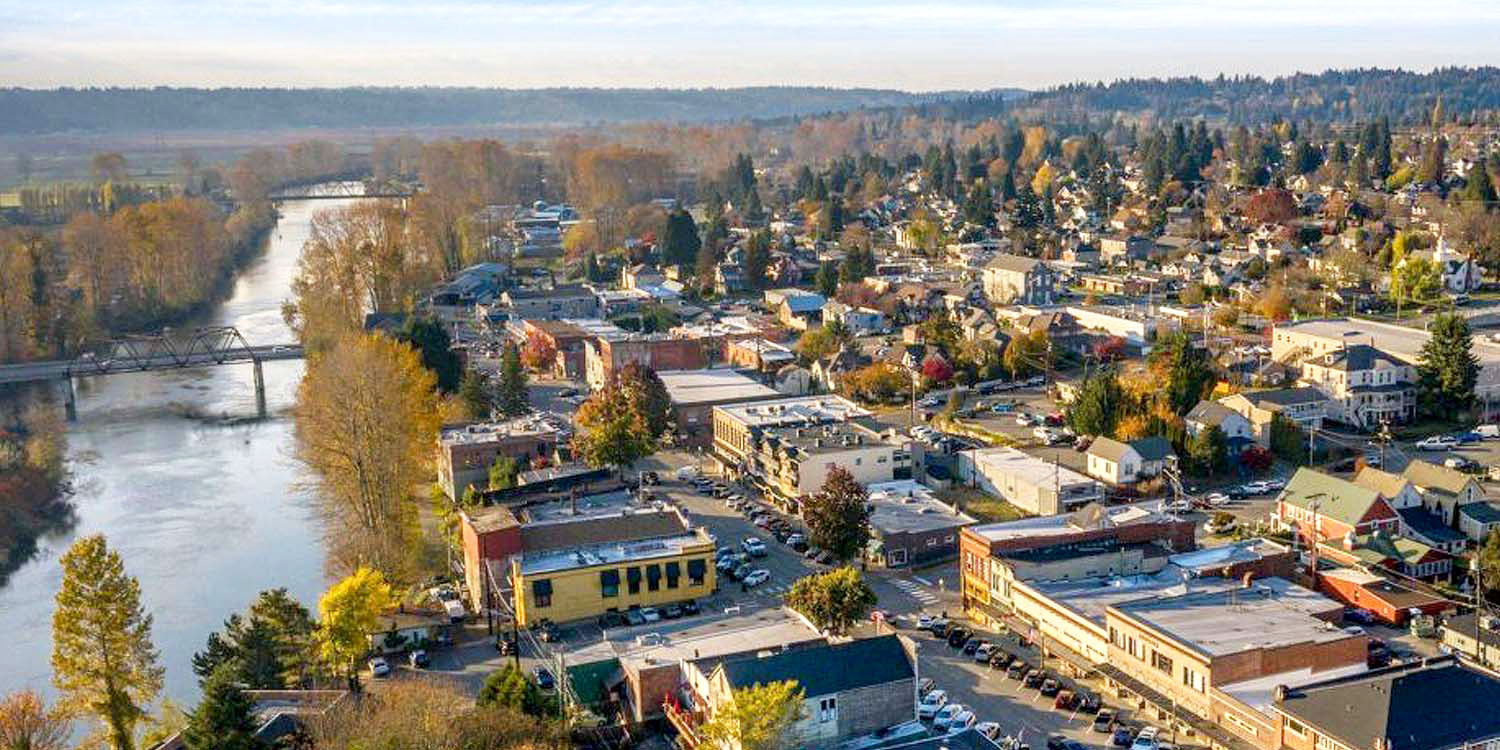
Community Transit is here to get you where you want to go. We are proud to be a part of the Snohomish community — we live here, ride here, and drive here. Wherever you need to go in Snohomish, feel good about how you get there.
About Snohomish
Snohomish is located on the Snohomish River, southeast of Everett and northwest of Monroe. Snohomish lies at the intersection of U.S. Route 2 and State Route 9.As of the 2020 U.S. census, there were 10,126 people, and 4,221 households in the city.
Key destinations in Snohomish include its historic business and residential center in its downtown district, Harvey Airfield, the Snohomish Aquatic Center, its local Boys and Girls Club and senior center, Snohomish's public , and its many parks and nature preserves. These include Ferguson Park and Hill Park on Blackmans Lake; Morgantown Park and Pilchuck Park on the Pilchuck River; and Cady Park and KlaHaYa Park in downtown on the Snohomish River.
Community Transit provides bus, DART Paratransit, and Vanpool service to Snohomish from surrounding cities. Two of these routes travel from Everett Station (with limited service to the Boeing Everett Factory) to Snohomish and continue east along US 2 to Monroe, Sultan, and Gold Bar. Another route travels from Lynnwood and Mill Creek to Snohomish and follows the State Route 9 corridor north to Lake Stevens. Community Transit also operates a commuter bus route that connects Snohomish and Monroe to Downtown Seattle with intermediate stops on Interstate 405 and State Route 520. The city also has one park and ride lot, located near Avenue D and State Route 9, that is owned by the Washington State Department of Transportation (WSDOT).
Snohomish is also the southern terminus of the Centennial Trail, an intercity multi-use path for pedestrians, cyclists, and equestrians.
Popular Destinations

Prepping for the trip: A bus driver’s checklist before hitting the road
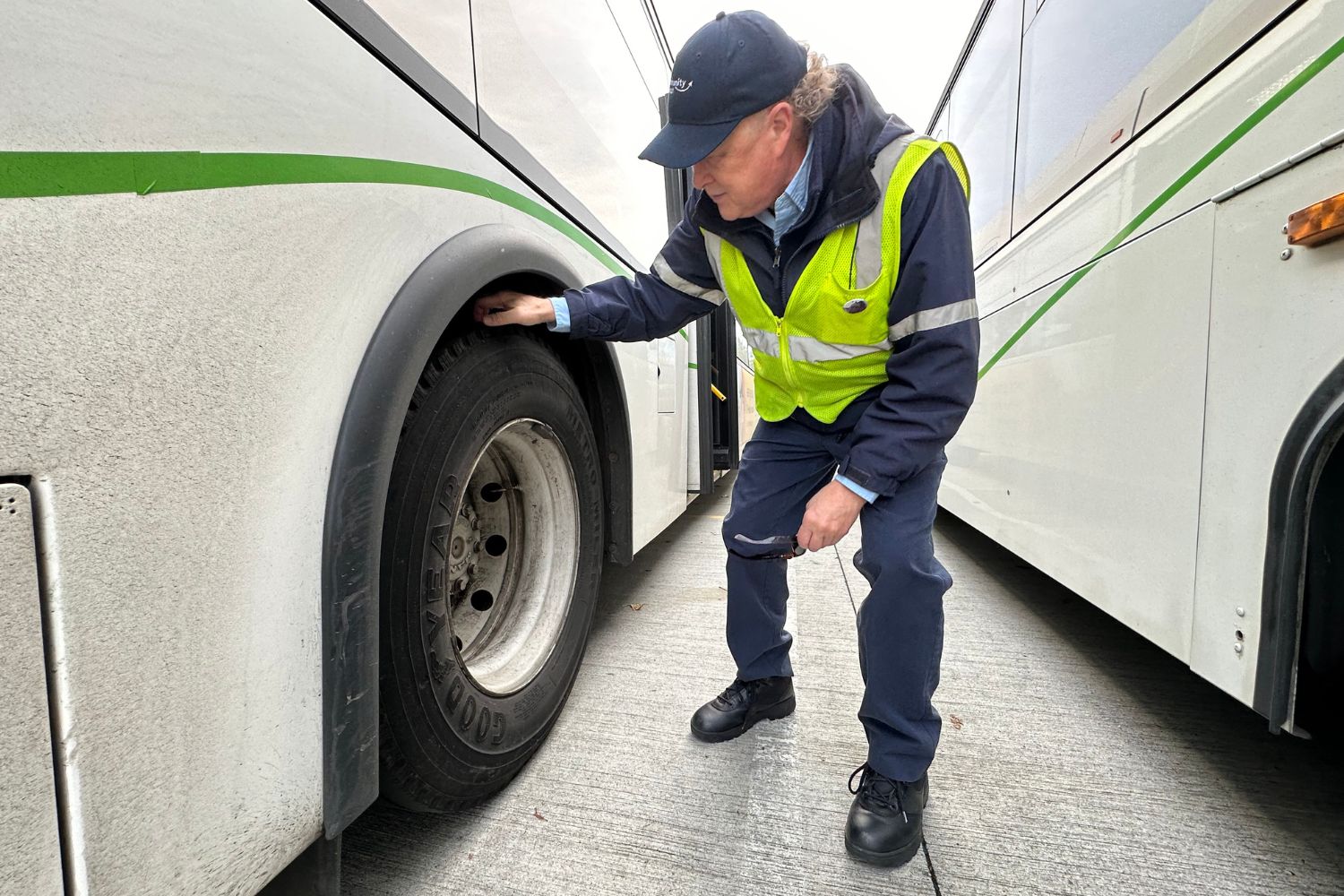
Pictured above: Community Transit driver David Nicholson checks the tires on his bus during a pre-trip inspection.
Did you know that Community Transit operates more than 1,200 trips each weekday? Over the weekend, this number drops to roughly 700 trips a day. While each trip starts at the first stop on the route for riders, the bus driver’s work starts well before that.
Safety starts at the beginning of a shift
Before our drivers embark on their workday, they educate themselves on any updates that may impact their route or riders. Here is a breakdown of what a driver might do before they head to their bus:
12:00 p.m. – Arrive at the bus base and clock in for their shift at the dispatch window. Drivers pick up forms they need, such as turn-by-turn maps, or read any notes left for them by their supervisor. Extra board drivers, who may drive a different route every shift, will check in to see what their route is.
12:05 p.m. – Read the information boards containing construction and route updates to stay informed about any changes that might affect their riders.
12:07 p.m. – Head to the “yard shack” to retrieve their assigned bus for the day. Buses are neatly organized by size: 30 ft, 40 ft, and 60 ft. At our Kasch Park base, they may be assigned a Double Tall bus.
12:10 p.m. - Perform a thorough 10-minute pre-trip inspection to ensure their assigned bus is ready to transport passengers to their destinations safely. Once this is done, the driver can get moving!
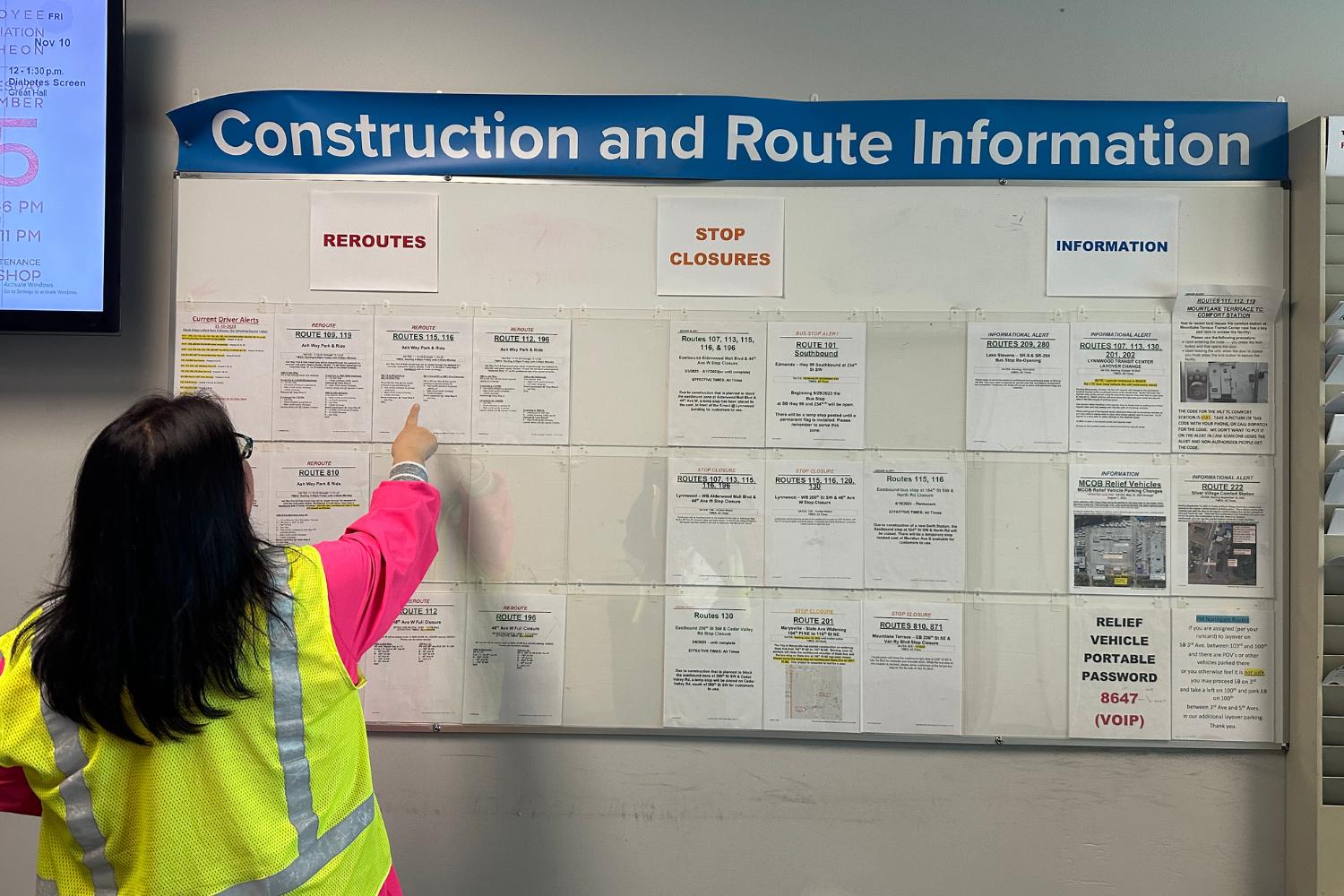
Pictured above: Heather Ratley, Assistant Manager of Transportation at Community Transit, demonstrates the construction and route information board our drivers review when they start a shift.
What happens during a pre-trip inspection?
A pre-trip inspection is a list of more than 50 tasks that Community Transit drivers complete before heading out for the day to make sure that their vehicle is safe and reliable. The tasks include:
- Checking that the horn, brakes, lights, and doors are working.
- Confirming the bus is fueled and all the fluids are at the correct levels.
- Checking the bus exterior for damage like flat tires, broken mirrors, cracked windows, or dents.
- Confirming that the wheelchair ramps and hydraulic systems are working.
- Making a test call to dispatch to ensure their radio system is working.
- Confirming all safety equipment is on board the vehicle.
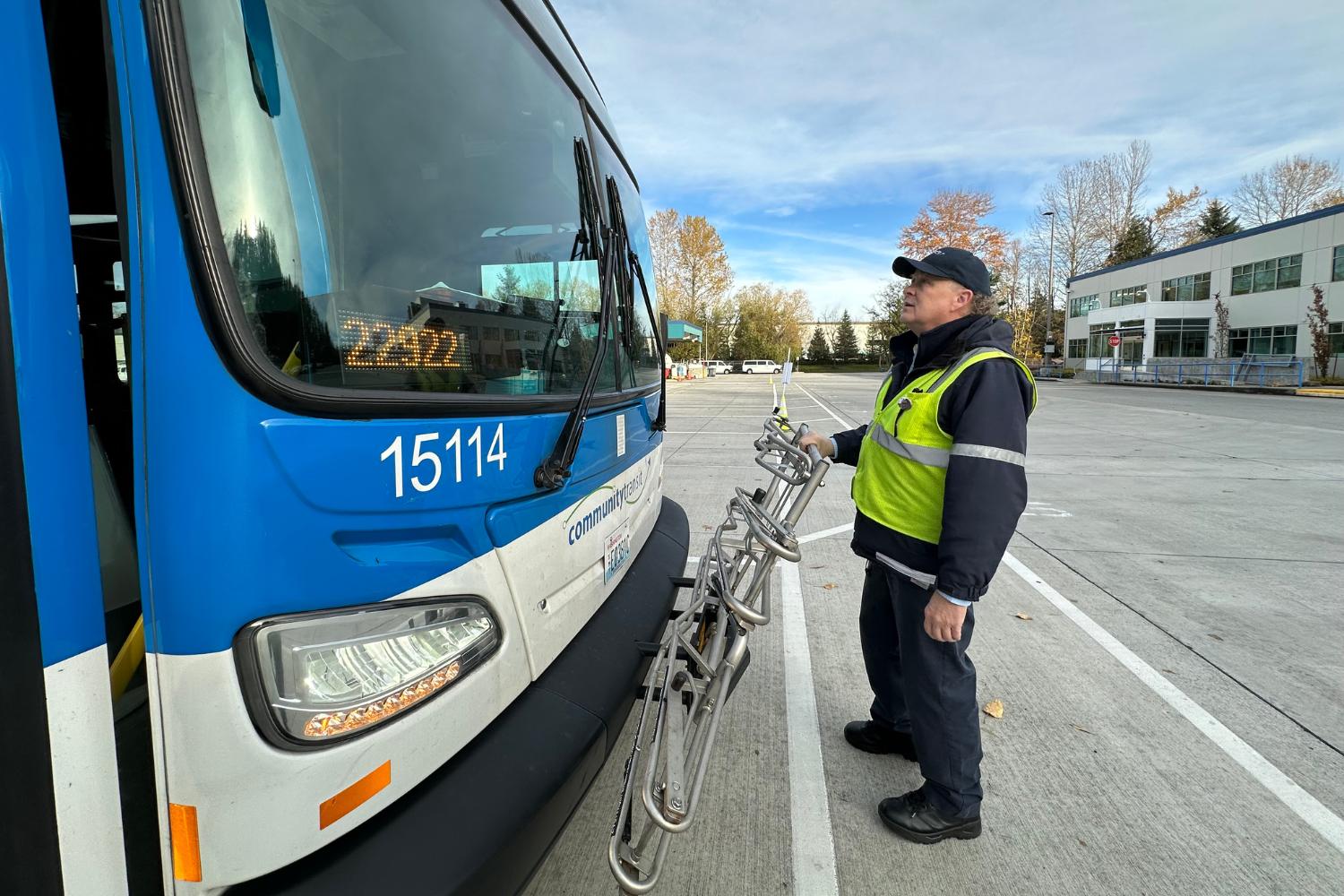
Pictured above: Community Transit driver David Nicholson ensures his bike rack works during a pre-trip inspection.
If the driver finds something wrong during pre-trip, they will radio dispatch and be directed to report it to the maintenance shop. They will then be issued a new bus and perform another pre-trip inspection before heading out.
By dedicating time to checking for updates, performing pre-trip inspections, and promptly addressing any issues, our drivers play a crucial role in keeping our buses reliable and our riders safe!
.webp?sfvrsn=9c3a2be1_2 "Sam Menzimer")
